


Some kids do not fear braces or how they will look, most though, worry about what they’ll feel or look like. Whatever your child feels, you probably have some queries and concerns of your
own about braces (including how much they cost!). Here’s some information on kids and braces.
Why do Kids Need those Braces|
A Kid can need braces for a number of reasons, including crooked, overlapping, or overcrowded teeth, or a “bad bite” (known as malocclusion). Malocclusion is caused when there’s a difference in the sizes of the top and bottom jaws. When the lower jaw is bigger, it’s called an underbite and when the upper jaw is bigger than the lower jaw, it’s called an overbite.
Sometimes teeth and jaw problems can be caused by losing baby (milk) teeth too soon, accidents, or habits like thumb sucking, mouth breathing etc. Most often they’re inherited, so if you or someone in your family needed braces, it’s likely that your kids will need them too.
Your child’s dentist often will be the first to notice problems during a regular visit and may recommend that you see an orthodontist (a dentist who specializes in correcting jaw and/or teeth alignment problems). An orthodontist can then decide whether your child does indeed need braces and if yes, which type and what duration would be best.
There’s no set ideal age for a child’s first orthodontist visit — some kids go when they are 6 years old, some go when they are 10, and some go while they are in their teens. Even an adult can need orthodontic treatment. Many orthodontists suggest kids must see an orthodontist once their permanent teeth start coming in, that is- around age 7. At this age, issues such as uneven bite and overcrowding will become apparent and easy to diagnose for an orthodontist.
Starting the process early doesn’t mean your child will get braces right away. It just means the orthodontist will be able to find problems, plan the treatment and decide the best time to start the procedure.
The First Orthodontist Visit
During the first visit, the orthodontist will thoroughly examine your child’s teeth, mouth, habits and jaw alignments. He or she may ask your child to bite the upper and lower teeth together and may also ask questions about whether your child has any problems while chewing or swallowing, or has ever noticed clicking or popping of the jaw.
The orthodontist may even take X-rays of the mouth and teeth to see how the teeth are positioned and whether any permanent teeth still need to come out, as per his age. He or she may also make a mold (or impression) of your child’s teeth by pressing a tray of impression material onto the top and bottom teeth. When the mold is removed from the impression taken, the result is a replica of your child’s teeth that will allow the orthodontist to decide and also explain to you which treatment options are best.
Various Types of Braces
Braces help to correct alignment problems by putting constant pressure on the teeth, eventually moving them into a straighter, ore desirable position.
Most kids may just need braces with brackets, wires, and rubber bands. The brackets are attached to the teeth and are then connected by a wire and rubber bands. The wire is tightened little by little over time to slowly help align the teeth properly. The rubber bands come in various colors that kids may be allowed to pick. Though metal braces are still in use, you have an option to pick clear or white ceramic braces, which are less noticeable. Some even go with behind the teeth braces (lingual braces).
Clear and removable braces that correct teeth with plastic trays are called aligners (rather than wires and rubber bands) are also available; your dentist will suggest only if they are right for your case.
Some kids may need other devices too, such as a headgear (don’t worry — this is generally worn only at night!). Headgear uses a horseshoe-shaped wire that attaches to the back teeth, providing a stronger force to move the teeth. The orthodontist also may recommend that your child get one or more teeth removed to create desired space in his or her mouth.
Once the braces are placed, your child will need to visit the orthodontist every few weeks or as suggested, for monitoring and adjustments.
For how long your child will need to wear the braces, will depend upon the problems the orthodontist is trying to fix, but the general average is about 2 years. After which, your child might only wear a specially molded retainer — a small, hard piece of plastic with metal wires or a thin piece of plastic shaped like a mouth-guard. Retainers keep the teeth from moving back to their previous places.
Caring for Braces
Since it is very easy for food to get stuck in wired braces, kids who wear them will need to work extra hard to keep their teeth clean. Brushing after each meal is essential, so is daily flossing (the orthodontist can give your child a special floss to use in and around the braces). Regular dental cleaning visits and checkups to prevent cavities are also a must.
Your child needs avoid certain foods (such as popcorn, hard and sticky candy, and gum) because they can damage or break the braces. Sugary sodas and juices can also be problem, because they contribute to tooth decay. Kids with clear plastic aligners need to always remove them at the time of eating.
Because braces put pressure on the teeth, they may feel uncomfortable or painful once in a while, especially after the orthodontists make adjustments. Taking over-the-counter pain killers and eating soft foods for a few days can help if this happens.
You must see the orthodontist right away if your child has a loose wire or bracket, or a broken wire that is poking his or her mouth. If your orthodontist can’t find a problem, your child might be advised to use some soft orthodontic wax to cover the sharp spots on the braces that are troublesome or are rubbing against the inside of the mouth or gums.
Caring for Braces
You must see the orthodontist right away if your child has a loose wire or bracket, or a broken wire that is poking his or her mouth. If your orthodontist can’t find a problem, your child might be advised to use some soft orthodontic wax to cover the sharp spots on the braces that are troublesome or are rubbing against the inside of the mouth or gums.
Oral rehabilitation of carious and mal-aligned teeth.
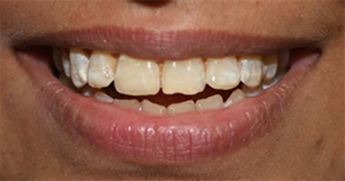
Restoration of the smile of a young lady with porcelain laminates. 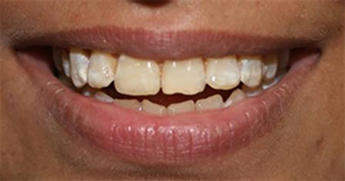
Restoration of the smile of a young lady with porcelain laminates.
Restoration of the smile of a young lady with porcelain laminates.Restoration of the smile of a young lady with porcelain laminates. Restoration of the smile of a young lady with porcelain laminates.
Oral rehabilitation of carious and mal-aligned teeth.Oral rehabilitation of carious and mal-aligned teeth.
You must see the orthodontist right away if your child has a loose wire or bracket, or a broken wire that is poking his or her mouth. If your orthodontist can’t find a problem, your child might be advised to use some soft orthodontic wax to cover the sharp spots on the braces that are troublesome or are rubbing against the inside of the mouth or gums.